The Decade’s Best: No. 11 Matt Murton

week11_MattMurton.jpgMatt Murton
Wareham 2001 & 2002
Outfielder
Georgia Tech

He’s got an MVP award and plenty of great numbers, but it’s what Matt Murton did in 2002 that really pushed me to put him this high on the list.

He only played in 16 regular-season games that summer. It was the shorter and less impressive of his two Cape League seasons. The year before, he won an MVP award.

What makes the summer of 2002 amazing is that Murton could have very well spent it at home.

Coming off his MVP season in 2001, Murton hit .344 with 10 home runs in his sophomore year at Georgia Tech. He was slated for Team USA, a shoo-in to make the squad. At tryouts, he broke a finger.

That’s obviously not a major injury, but it’s enough to keep you out, especially in summer ball.

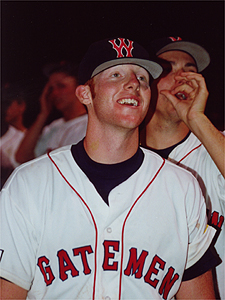
But as soon as he could play, Murton was suiting up for the Gatemen. He played in only 16 games, but he hit .400 and his presence in the lineup helped power the Gatemen into the playoffs. Once there, they surged, with Murton helping lead the way. In five playoff games, he had four hits and scored five runs. The Gatemen won their second consecutive Cape League championship.

Murton had a huge hand in both. As Cape League fans, I think we like to latch on to players who seem to “get it.” It’s fun following prospects and watching radar guns, but in the end, we love seeing players who view the league the same way we do — as a really unique and special place.

By all accounts, Murton was one of those guys. When you factor in his 2001 season — in which he hit .324 with 28 RBI — it’s no surprise that he was elected to the league’s Hall of Fame just six years after he was on the field.

After the Cape

The Red Sox picked Murton with their first-round pick in the 2003 draft. He shined in the minors and was traded to the Cubs in the Nomar Garciaparra trade. He made his Major League debut with the Cubs in 2005 and spent parts of four seasons in Chicago. He was traded to Oakland, then Colorado. In 2009, he split time between Triple A and the bigs in Colorado. In December, his contract was sold to Japan’s Hanshin Tigers, and it appears he’ll continue his career there.

The Decade’s Best: No. 12 Ben Crockett

photo_allstar_BenCrockett.jpgBen Crockett
Wareham 2000 & 2001
Pitcher
Harvard

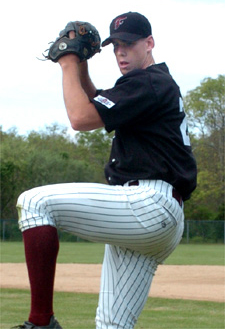
I don’t know what’s more amazing: that Ben Crockett somehow went 1-6 in 2001 or that he averaged 70 strikeouts per season in a two-year Cape-League career.

For the purposes of this list, we’ll go with the strikeouts.

Crockett’s 1-6 record went along with a remarkably mismatched 1.67 ERA, one of the strangest statistical pairings you’ll ever see. But the strikeout numbers? Those are pretty rare, too.

And they’re the reason Crockett is here. He had 140 of them, and he’s the decade’s strikeout king.

Crockett, a Massachusetts native, came to the Cape as part of the Wareham-Harvard connection driven by John Wylde. Immediately, Crockett made a splash, going 5-1 with a 2.95 ERA and 66 strikeouts in 2000. He helped lead the Gatemen to a playoff berth and he shared Cape League Pitcher of the Year honors with Chatham’s Dan Krines.

He was back in Wareham in 2001, when he put together that strangest of statistical lines. Despite striking out 74, walking just nine and allowing just 11 earned runs, Crockett somehow picked up just the one win.

Initially, as I looked at the numbers, I had Crockett a little lower on this list, primarily because of that 1-6 mark. But when you realize that it’s an anomaly and a case of amazingly hard luck, you can start letting the rest of the numbers do the talking.

And they’re loud. In addition to the overwhelming strikeout numbers, Crockett also shined in the playoss. In game one of the 2001 West finals, Crockett pitched 7.2 shutout innings and struck out nine in a win over Bourne. He struck out seven in five innings in the decisive game of the championship series, which Wareham went on to win.

After the Cape

Crockett was drafted by the Rockies in the third round of the 2002 draft. He made it as far as Triple A before hanging it up. He has stayed in baseball, though, and is currently the Boston Red Sox’ Assistant Director for Player Development.

The Decade’s Best: No. 13 Tim Norton

Wk1_TimNorton_B.jpgTim Norton
Falmouth 2005
Pitcher
Connecticut

Some of my favorite Cape League stories have as their central characters the player who hooks onto a team as a temp and then turns into a star.

No story like that is better than Tim Norton’s.

In June of 2005, Norton was coming off a good– but not great — junior season at the University of Connecticut. His ERA was 3.07 and he had some good strikeout numbers, but he was still a swingman, pitching both as a starter and as a reliever.

Like a lot of New England players, Norton hoped to catch on with a Cape League team. He went to the annual tryout in Wareham. He did enough to get a temporary deal with Falmouth.

The next two months couldn’t have been scripted any better.

Norton went eight shutout innings in his first start, allowing just two hits and striking out nine. That probably would have been enough to earn Norton a full summer, but he continued to prove himself time and again. He struck out 11 in his next start and 12 after that.

Soon enough, he was picked for the all-star team, and he just kept turning in good start after good start. He finished the summer with a 5-1 record, a 1.77 ERA and 77 strikeouts in 61 innings. That strikeout total is tied for the third-best mark of the decade.

In a Cape class full of outstanding pitchers, Norton shared Pitcher of the Year honors with North Carolina and Chatham star Andrew Miller. He also won the John Claffey New England Top Prospect Award.

After the Cape

Norton was drafted in the seventh round of the 2006 draft by the Yankees. It hasn’t been smooth sailing since then. Norton had shoulder surgery that kept him out of most of the 2007 season and all of 2008. He finally worked his way back in May of 2009 and turned in a solid season for the High-A Tampa Yankees. In 23 relief appearances, Norton posted a 2.75 ERA.

The Decade’s Best: No. 14 Zane Carlson

p-CarlsonZane2004mug.jpgZane Carlson
Chatham 2001, 2002 & 2003

Pitcher
Baylor

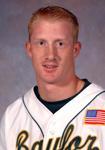
Very few players spend three summers on the Cape. In the decade, you could probably count them on one hand.

Even fewer have the impact that Zane Carlson had in Chatham.

For three years, if it was the ninth inning and the A’s were winning, there was a good chance you’d see Carlson making his way in from the bullpen. In his three seasons, he saved 34 games, becoming the league’s all-time leader. Chatham won 66 games in his time there, so Carlson saved half of them. When you figure that plenty of games didn’t yield save situations, you’re looking at a remarkable percentage.

Long considered a Chatham great, Carlson was inducted into the Cape League Hall of Fame last month.

I’d say it’s a well-deserved honor. I can think of very few players who are as much a real “Cape Leaguer” as Carlson. He never went on to great baseball success in the professional ranks, so college and the Cape were his opportunities to shine. He was undersized and never really captured the attention of scouts.

But he was a player, one who seemed to thoroughly enjoy his time on the Cape.

He made his first trip to Chatham in 2001, after his sophomore year. The summer before, he had actually been with Team USA, so you couldn’t have predicted that the Cape would become a second baseball home.

That first summer, Carlson was lights out, putting up a 1.23 ERA and saving 12 games. He struck out 26 in 22 innings.

In 2002, Carlson took a medical redshirt at Baylor but when summertime rolled around, he was back in Chatham. He saved 12 games again but this time led the league.

By the time he headed back to Baylor, Carlson was already the league’s all-time saves leader, but he was back in 2003 to break his own record. He saved 10 more games, becoming the first player in league history to save 10 or more games for three consecutive seasons. He also ended up second in league record books in career appearances (61) and career strikeouts by a relief pitcher (91).

All in all, it was a remarkable Cape League career by a guy who seemed to really get what the league was all about. At the Hall of Fame induction ceremony, he said, “I was hoping this would be at the Squire, but Chatham Bars Inn is fine.”

A Cape Leaguer through and through.

After the Cape

Carlson set Baylor and Big 12 saves records and is still tied for 13th nationally in career saves. He was drafted in the 27th round of the 2004 draft and pitched three seasons in the minors.

The Decade’s Best: No. 15 A.J. Pollock

PP7_AJPollock.jpgA.J. Pollock
Falmouth 2008
Outfielder
Notre Dame

For a while back in 2008, it looked like No. 16 on this list — Grant Green — would be a shoo-in for league MVP honors.

But no one counted on A.J. Pollock sneaking in.

Pollock didn’t come to the Cape with as much hype as Green and he didn’t leave with as much, either. But along the way, he out-did Green and authored one of the best MVP seasons we’ve seen in quite some time.

Pollock, a Connecticut kid who shined in the NECBL in 2007, picked up where he left off upon returning to New England. From day one, he was in the lineup as Falmouth’s leadoff hitter and center fielder. He got himself in his base in his first 10 games, bringing it to a crescendo on July 2 when he went 5-for-5 in a win over Wareham.

From that point on, you couldn’t forget about Pollock anymore. He became one of the league’s biggest stars and continued to shine through the end of the season. While some other players saw their numbers dip, Pollock slugged through the all-star game, moved to the three-spot in the batting order and stayed consistent until the season’s last day, when he went 2-for-5 with two RBI in a win over Hyannis.

Pollock helped lead the Commodores to a play-in game win over Bourne, before they were edged by Cotuit in the West Division finals.

After the Cape

Pollock’s big summer greatly enhanced his draft stock and after a strong junior season at Notre Dame, he was taken by the Diamondbacks with the 17th pick in the 2009 draft. He was assigned to Class A South Bend, where he hit .271 in 63 games.

The Decade’s Best: No. 16 Grant Green

AW_GrantGreen2.jpgGrant Green
Y-D 2007 & Chatham 2008
Shortstop
USC

Grant Green spent two very different summers on the Cape. In 2007, he was a utility player on a championship team. In 2008, he was the league’s brightest star while playing for a different team.

But through it all, there was a common thread: Grant Green was something special.

He came to the Cape after his freshman season at USC. If he’d been anywhere other than Y-D, in any year other than 2007, he would have been an everyday starter and a star in the making. But on a Red Sox team that featured three top-10 picks, Green had to fight for playing time. A shortstop by trade, he spent time at all four infield positions.

I imagine it was tough for him, but the tougher part was keeping him off the field. Despite bouncing around, Green hit .291 for the Red Sox with four home runs and eight doubles. In the playoffs, when the Red Sox swept to the championship, Green added two more home runs.

The next summer, Green was presented with a different opportunity, but he made the most of this one, too. He turned down Team USA, headed to Chatham, played in every game but one and delivered a huge season. At one point in late July, he’d been on base in every single one of Chatham’s games, with a hit in all but three. By the end of the year, he’d been passed on the batting average leaderboard, but he still hit .348 with six home runs and 21 RBI. He ranked fourth in hitting, third in hits, third in doubles and second in slugging percentage and runs scored.

Green also delivered one of the best all-star game moments of the decade, and maybe further back than that. With Green’s Chatham squad serving as hosts and with his East all-stars down two runs in the eighth inning, Green belted a monster two-run home run to straightaway center field that tied the game. The East stars went on to win the game, and Green’s blast took its place in Cape League folklore.

When end-of-season awards were handed out, Green went home with top pro prospect honors, and nobody was surprised.

After the Cape

Green didn’t flash much power in his senior season at USC so he slipped a little bit in the draft. He had been mentioned as a top-five pick but ended up going 13th to the A’s. So far, he’s made just a brief appearance in Class A.

The Decade’s Best: No. 17 Ryan Speier

ph_434627.jpgRyan Speier
Bourne 2001
Pitcher
Radford

It seems that every summer, there’s a closer who gets off to a really fast start, picking up saves in a high percentage of his team’s wins. But most times, the pace eventually slows down. Saves leaders usually finish with 11 or 12. That’s kind of the benchmark.

Ryan Speier was the exception — and he remains the biggest exception.

In 2001, Speier set an all-time CCBL record when he saved 16 games for Bourne. That record still stands, and the way thing are going, it’s going to stand for awhile.

Unlike some statistics, saves require opportunity more than anything else. In the case of Speier, he made the absolute most of his opportunities.

He pitched 20 innings in 20 appearances. He allowed 10 hits and one unearned run. His season ERA was 0.00, and he struck out 35.

Most remarkably, he saved 16 of Bourne’s 23 wins.

That’s a lot of opportunities, and for Speier, the whole summer proved to be one big opportunity. He came to the Cape from Radford. He went undrafted in June.

But suddenly, there he was, turning every head. I still remember Peter Gammons talking about Speier’s record-setting summer on ESPN’s Baseball Tonight.

At the end of the summer, Speier signed a free agent contract with the Rockies, and he was in the majors four years later.

After the Cape

Speier has pitched parts of the last four seasons with Colorado. In December, he signed with the Nationals.