It’s Baseball Season

Picture 23.png

We have arrived at a happy little day.

It’s cold in New England, with no signs of spring. But today, in mostly warmer locales, the march to summer begins. There are 114 days until the Cape League season begins, and now, thankfully, these days will have a little baseball.

The college baseball season gets going today with a couple of noon games. By evening, it’ll get going in earnest, with some nice games on tap, including a series between perennial powers Rice and Stanford.

It feels like a milestone in the Cape League off-season, a time to get this thing into gear again. The Never-Ending Countdown — I should have done 25 — will finally end on Saturday. Only a month-and-a-half late.

Then, it’s on to more important matters. My plan for the college season is to do a regular Friday post that highlights a series CCBL fans might be interested in. Then a little recap of the weekend at some point during the week, plus some random notes here and there. In late March, once the season has gotten going, I will start in on the Cape League early looks.

Before you know it, June. I can’t wait.

Happy baseball.

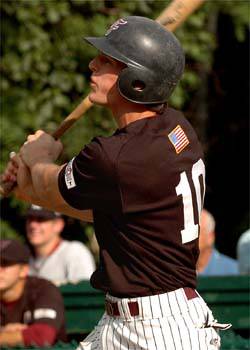
The Decade’s Best: No. 6 Daniel Carte

AW_DanielCarte.jpgDaniel Carte
Falmouth 2004
Outfielder
Winthrop

Daniel Carte did not have a hit in the first 19 at-bats of his Cape League career.

Think about that for a second, because I think you remember what happened after that. You remember Daniel Carte, and it’s certainly not because he went 0-for-19. If you start 0-for-19, you can go 10 for your next 20, and still only be hitting around .250.

From those beginnings, Daniel Carte had one of the best offensive summers you’ll ever see.

It took him until June 23 — seven days into the season — to get a hit, but the way he got it might have been a clue of what was coming. In the bottom of the ninth inning against Cotuit, Carte led off with a walk-off solo home run that gave Falmouth a 5-4 victory. Not only was that the first hit of the summer for Carte, it gave Falmouth its first win.

The fortunes of the two would continue to improve.

Falmouth ended up with the second-best record in the league, going 25-13 after the early struggles. An impressive turnaround, but maybe not quite as impressive as Carte’s.

He was a small-school kid, not particularly tall, no jaw-dropping numbers at Winthrop. I don’t know how he kept his confidence through the 0-for-19 start. A lot of times, a bad start means a bad summer, and vice versa. The start can be everything.

Carte left it completely in the dust. The day after he hit the walk-off blast, he homered again and drove in two. The next day, he went 2-for-3 with another home run.

Yeah, he was a little streaky, but he never hit a cold spell again. He finished the summer with a .308 average, 11 home runs, 38 RBI and 13 steals. He led the league in homers, RBI, extra-base hits and slugging percentage and he was third in both hits and runs and fourth in hitting. He also became just the sixth player in league history to hit double digits in home runs and steals.

He was the total package — a shoo-in for the MVP award — and the numbers still stand up. Aside from Carte and his 38, no one in the decade had more than 35 RBI. No one hit more than 11 home runs either.

Pretty good for a guy who couldn’t buy a hit when the season began.

After the Cape

Carte’s summer vaulted him into the second round of the 2005 draft, where he was taken by the Rockies. He hasn’t found huge success yet in the minors. His best year was 2007, when he hit .283 with 14 home runs. Carte spent 2009 in Double A.

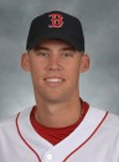
The Decade’s Best: No. 7 Daniel Bard

bard1.jpgDaniel Bard
Wareham 2005
Pitcher
North Carolina

Power pitchers may light up radar guns, but they don’t always do it that frequently when they’re on the Cape. Over the years, bullpens have been a pretty common landing spot for flame-throwers, even for some who are starters on their college teams.

Daniel Bard did not take that path. Far from it. In 2005, Bard led the league in starts and innings pitched. He made 10 starts and logged 65 innings.

All the exposure was a very good thing. For the benchmarks that you think of when talking about power pitchers, Bard had probably the best single season of the decade. He led the league in strikeouts with 82, and that stood through the next four years as the best mark of the decade. He also had a 1.25 ERA, and he surrendered just 42 hits. His K/9 was 11.4.

Those are pretty remarkable numbers, especially when you consider how often Bard was on the mound. While more innings obviously pave the way for more strikeouts, they also create more opportunities for bad moments.

Bard didn’t have many. He allowed nine earned runs all summer. The most he allowed in any one start was three.

And Bard didn’t get tired either, despite pitching 89.2 innings for North Carolina in the spring. As the summer wore on, Bard actually got stronger. After he allowed three runs in a duel with UNC teammate Andrew Miller on July 20, Bard delivered his three best starts of the summer. On July 25 against Hyannis, he struck out 12 and walked one in seven shutout innings. Six days later, he went nine shutout innings, allowed one hit and struck out 10 against Brewster. He closed out the season by striking out 10 in seven innings against Bourne.

Fittingly, that last start came on the last night of the regular season. Bard was on the mound, just as he was on day one.

After the Cape

Bard was named the No.2 prospect in the league in 2005 and was drafted 28th overall by the Red Sox the next June. After some shakiness as a starter in 2007, Bard was moved to the bullpen in 2008, and the rest is history. He made it to Boston in 2009 and emerged as one of the game’s most exciting young power relievers. He struck out 63 in 49.1 innings and touched 101 mph on the radar gun.

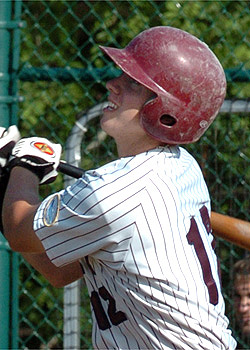
The Decade’s Best: No. 8 Conor Gillaspie

AW_ConorGillaspie_7590.jpgConor Gillaspie
Falmouth 2007
Third Baseman
Wichita State

His was a Cape League class full of big hitters and top prospects, from Gordon Beckham and Buster Posey to Yonder Alonso and Reese Havens. Conor Gillaspie might not have been in the same conversation as those guys when the summer of 2007 began.

He was definitely there by the end.

A late arrival after Wichita State’s post-season run, Gillaspie batted fifth in his Falmouth debut and turned in an unassuming 1-for-3 line. The next day he went 0-for-5.

A few days later, he went 4-for-5 with a home run, two doubles and three RBI. It was that kind of summer for Gillaspie. From humble beginnings came one of the best all-around offensive seasons we had seen in a while.

Gillaspie came to Cape Cod after his sophomore season with the Shockers. He hit .325 with six home runs. Good numbers, but not really enough to put him firmly on the national radar.

Once he came to the Cape, everything changed. That 4-for-5 performance was the beginning of a remarkable run. He caught fire in early July, getting a hit in nine straight games. As he got more and more at-bats, his name popped up on the batting average leaderboard. He was flashing power, too, and hitting a lot of doubles and driving in runs. By the time he hit two home runs against Hyannis on July 20, he had placed himself among the league’s stars.

He made the all-star team and didn’t stop hitting. He finished the summer by winning the batting title with a .345 average. He was fourth in home runs with seven, fourth in doubles with 12, second in on-base percentage, first in slugging and first in extra-base hits. Stars from recent years had put up numbers like those in one category, maybe two. Gillaspie shined across the board.

He beat out players like Beckham and Alonso for MVP honors, and it was absolutely the right call. When we talk about a great offensive summer down the line, Gillaspie’s 2007 campaign is one we’ll compare it to.

Yes, his was a class of stars. Gillaspie may have shined brightest.

After the Cape

Gillaspie’s Cape League performance forced scouts to take notice. There wasn’t much of a consensus among them about how his tools projected, but after he hit .419 with 11 home runs as a junior, he was drafted with the 37th overall pick in 2008 by the Giants. He had a cup of coffee with the big club later that summer, but he wasn’t meant to stick around. He spent 2009 in Single A, where he hit .286 with four home runs.

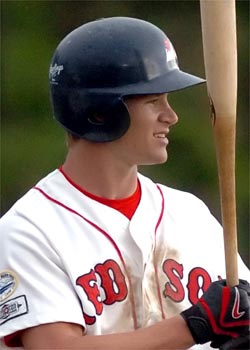
The Decade’s Best: No. 9 Gordon Beckham

WK2_GordonBeckham.jpgGordon Beckham
Y-D 2007
Shortstop
Georgia

You probably couldn’t call Gordon Beckham the best power-hitting shortstop of the decade. He’s got stiff competition there. You couldn’t really call him the best hitter in his Cape League class, either, and by the time the next year’s draft rolled around, you couldn’t even call him the best prospect from his Cape League team.

But in the summer of 2007, Gordon Beckham was the best player on the best team we’ve seen in a long time.

And you can stack up what he did against pretty much anybody.

Beckham was the ringleader for the 2007 Yarmouth-Dennis Red Sox, who hit a .278 as a team and steamrolled to their second consecutive league championship. In a lineup that featured four players who would become first-round picks, Beckham was the biggest power threat and the biggest run producer. Of all the great hitters on that team — Posey, Castro, Green — I think you’d want to steer clear of Beckham more than anybody else.

He came to the Cape after his sophomore season at Georgia, where he hit .307 with 15 home runs. It was a good year, but in the summer, Beckham took a leap — and he started his jump right away. In his first game, he had a double and an RBI. In his second game, he went 3-for-4 with a homer and three RBI. Pretty quickly, he became one of the big early stories in the league, and he never really faded.

Beckham finished the summer with a .284 average, a league-best nine home runs, nine doubles and 35 RBI, which tied him for the league lead. In the playoffs, Beckham helped Y-D secure its title with a home run and four RBI in four games.

After the Cape

If Beckham’s summer was huge, his next college season was enormous. He hit .411 with 28 home runs and 77 RBI en route to SEC Player of the Year honors. He was selected by the White Sox with the eighth overall pick in 2008, and he’s already made his Major League debut. He hit .270 for Chicago in 2009 with 14 home runs.

Two Hundred Fifty Eight

For a Cape League fan, the trickling in of rosters is one of the little joys of winter.

It’s less of a trickling this year. More of a deluge.

And I’m not complaining.

As you’ve probably seen, Commissioner Paul Galop released every preliminary roster on the league’s web site. No more wondering who will post a roster next, and no more waiting until June to see Chatham’s list.

By my count, there are 258 players currently on the rosters. It’ll change, of course, but all in all, we’ve got a pretty good and very early idea of the players who will arrive on the Cape a few months from now.

I will do my normal early look features once the college season gets going, but I thought I’d highlight some of the bigger names I noticed on my first look at the rosters I haven’t written about yet (I’ve already run through Wareham, Cotuit and Hyannis). These are just names that jumped out. There are plenty of other potential stars.

Bourne

Anthony Rendon – 3B – Rice – Probably the top freshman in the nation last year. Might have played in Bourne if not for an injury that kept him out all summer.
Anthony Meo – RHP – Coastal Carolina – At my real job, I actually covered Meo in high school. He’s a Rhode Island native who had a fantastic first season at Coastal.
Pierre LePage – IF – Connecticut – The heart and soul is back.

Brewster

Rob Brantly – C – UC Riverside – Top prospect in the Northwoods League in ’09.
Troy Channing – 3B – St. Mary’s – Hit .379 with 20 HR as a freshman.

Chatham

Brian Humphries – OF – Pepperdine – One of the top recruits in the country a year ago.
Aaron Westlake – IF – Vanderbilt – SEC batting champ last year.

Falmouth

Matt Purke – LHP – TCU – Maybe the biggest name. He was the 14th overall pick in the 2009 draft.
B.A. Vollmuth – SS – Southern Miss – He really emerged last summer and could be a top prospect this summer.

Harwich

Mikie Mahtook – OF – LSU – One of the heroes of last year’s College World Series.
Matty Ott – RHP – LSU – Made a huge splash as the Tigers’ closer.

Orleans

Mitchell Lambson – LHP – Arizona State – Had 99 strikeouts as a freshman.
Kolten Wong – OF – Hawaii – Hit .341 with 11 HR and made Team USA last year.

Y-D

Trevor Bauer – RHP – UCLA – Had a huge freshman season then spent the summer with Team USA.
Alex Meyer – RHP – Kentucky – Big hype last year as a freshman.

The Decade’s Best: No. 10 Justin Smoak

Wk3_JustinSmoak.jpgJustin Smoak
Cotuit 2006
First Baseman
South Carolina

When I think of must-see players in the Cape League, I think mostly of pitchers. Why? Maybe it’s the fact that you see a lot more of them — say, 100 pitches versus five at-bats. There’s also the tangible nature of their abilities — a 95 mph fastball versus good bat speed. I can’t necessarily identify bat speed, but I can tell when a fastball is really fast.

Whatever it is, pitchers draw the crowds. Unless there’s one of those rare must-see hitters around.

The league doesn’t have one every year, but when they come around, you’ll want to be watching.

Justin Smoak was one of them — and one of the most striking hitters of the decade.

He came to the Cape after his freshman season at South Carolina, a tall, switch-hitting first baseman who packed a ton of power on a Major League frame. He didn’t disappoint. Not even a little bit.

Smoak hit .286, smacked 11 homers, hit 20 doubles and drove in 27 runs. He also struck out just 36 times; a lot of Cape power hitters get into the 50s or the 60s.

Smoak was named league MVP and it wasn’t a surprise. Because, more than the stats, Smoak’s presence was impressive. If you saw him take a swing, you’d know he was a player with a really bright future, brighter than most. He just looked like a Major Leaguer.

Baseball America picked him as the league’s top prospect, ahead of Matt Wieters, who happened to be a high-school teammate of Smoak’s. Along with Wieters, I’d call Smoak one of the top three or four hitting prospects the league produced in the decade. Smoak was just at another level.

What makes his summer of ’06 even more amazing is that Smoak was doing it after his freshman season. He was 19 years old at the time.

It was easy to see that the sky was the limit.

After the Cape

Smoak was tabbed as a third-team All-American after his sophomore season, and he spent that summer with Team USA. The next year, he hit .383 with 27 home runs for the Gamecocks and was selected by the Rangers with the 11th overall pick in the 2008 draft. He has progressed quickly through the minors and was named by Baseball America as the organization’s second-best prospect after this season. He finished the year at Triple A.